I must say, Once Dead, Twice Shy by Kim Harrison was a bit of a disappointment. With the basic premise (dead girl who created a fake body with a stolen amulet tries to navigate normal life while light and dark reapers flit about her world) and the pretty cover (black and white photo, cool hair and eye make-up on the girl), I was expecting a much more exciting book. However, I had to practically force myself to plow my way through 232 pages of bland writing, under-developed characters, and a decidedly unharrowing plot.
One interesting thing that the book brings to the table is the idea that light is good and dark is bad. Most generally take that assumption and run with it, generally not questioning it. Even in its ridiculous abruptness, the story questions our idea of right and wrong, along with the argument over fate versus free will. Fascinatingly enough, the author chucks this idea in amongst the unimaginative dialogue and definitely-not-the-seat-of-your-pants action.
The protagonist is flat, with very little going on with her besides, of course, being dead, and "just wanting to be myself." Though, as the reading public, there's not a lot to tell us what brand of "me" this girl is. We know she likes purple hair and photography. Greatttt. There's not much else to work with.
Now, the plot was interesting, which is why I finished the book, faulty characters, boring writing, and all. One topic I've been drawn to in recent years is angels; one of my favorite books deals with the idea of floating angels and their role in desperate people's lives (but that's a whole other blog). I had originally been drawn to this book based on the idea of a corporeal body created by an amulet for a dead person and how cool that would be. But the reason I kept reading was the angels. Warrior angels, to be precise, which is probably one of the most bad-ass concepts ever. Avenging angels, epic swords, flowing cloaks, and curses on their enemies - it makes for a really exciting addition to a story. Not to mention that they're un-sexual beings (almost the opposite of hermaphrodites: they don't have a gender at all). They are also doing the work of God in the most direct manner, battling the actual root of the problem - evil in the form of actual demons and fallen angels.
But this book used a different idea of warrior angels, and while Harrison is perfectly at liberty to do that, as it's fiction, I was disappointed in the lack of distinction and attention paid to the angels, called "reapers." The particular brand of angel shown is much like humans but they are supposed to be the fearsome warrior angels who fight over the lives and souls of humans on earth. I don't know if she just didn't make them sound exciting enough, but I was disappointed because of how central of a role they played in the plot, but the best she could do was say they all looked like models, they were so pretty.
Moral of the story: it's a boring book that brings up some interesting points for about five seconds, before spiraling into its blandness once again.
Wednesday, December 30, 2009


Thursday, December 24, 2009
A Game of Thrones by George R. R. Martin
Whether they like it or not, everybody knows what a fairytale is. A story with a good guy, a bad guy, and a problem. The good guy has to solve the problem and defeat the bad guy - or, conversely, defeat the bad guy in order to solve the problem. The ending is always sickeningly good - the good guy saves the day and invariably manages to get the girl, hence the literary term "a fairy-tale ending."
 Unfortunately for all those good guys out there, life is not a fairy tale, and neither is A Game of Thrones by contemporary fantasy master George R. R. Martin. The unnerving realism of Martin's Thrones is the key to this novel, offsetting it from other fantasy epics: rather than a straightforward adventure or quest, the novel follows instead the escapades of three families during a period of political unrest, just before and just after the death of the middleaged king.
The majority of the plot revolves around a few central characters, though my personal favorites are Jon Snow and Daenerys Tarragon.
Jon Snow is the bastard son of one of the main characters, who was brought up in his father's household along with the legitimate children. Though he has the strengths and complexities of a leading character, he is described as homely bordering on ugly. Despite his less-than-heavenly looks and his status as illegitimate, though, Jon is tough as nails and more determined than any other common-born young men, even the legitimate ones. Raised as one of his father's sons, he is actually even a little spoiled - a fact thrown into his face by his commander, who forces him to grow up a little.
Another character I love, Daenerys Tarragon, is another character whose coming-of-age also figures prominently in Thrones. She begins the novel as a cowed young girl who is beaten, ridiculed, and likewise abused by her older brother, who "sells" her into marrying the chief of a nomad clan. The novel becomes slightly graphic while describing Dany's relationship with her husband, but it serves to highlight the difference between her gentle and loving husband, a courageous leader, and her cowardly puke of a brother. Eventually, her husband gives her a confidence all her own, creating in her the "dragon queen" that she was meant to become.
A Game of Thrones is at once a book about politics and a book about human nature, well-crafted by its artist to hone each detail of life in the Seven Kingdoms. Readers will find themselves immersed in the realistic middle-ages lives of the characters, living and dying in a natural pattern that spares none for goodness or nobility.
Critic's Conclusion: Readers of high fantasy will love Martin's modern classic. However, this novel is not for the young or for the casual reader, and those looking for a fairy-tale ending are sure to find themselves disappointed.
Unfortunately for all those good guys out there, life is not a fairy tale, and neither is A Game of Thrones by contemporary fantasy master George R. R. Martin. The unnerving realism of Martin's Thrones is the key to this novel, offsetting it from other fantasy epics: rather than a straightforward adventure or quest, the novel follows instead the escapades of three families during a period of political unrest, just before and just after the death of the middleaged king.The majority of the plot revolves around a few central characters, though my personal favorites are Jon Snow and Daenerys Tarragon.
Jon Snow is the bastard son of one of the main characters, who was brought up in his father's household along with the legitimate children. Though he has the strengths and complexities of a leading character, he is described as homely bordering on ugly. Despite his less-than-heavenly looks and his status as illegitimate, though, Jon is tough as nails and more determined than any other common-born young men, even the legitimate ones. Raised as one of his father's sons, he is actually even a little spoiled - a fact thrown into his face by his commander, who forces him to grow up a little.
Another character I love, Daenerys Tarragon, is another character whose coming-of-age also figures prominently in Thrones. She begins the novel as a cowed young girl who is beaten, ridiculed, and likewise abused by her older brother, who "sells" her into marrying the chief of a nomad clan. The novel becomes slightly graphic while describing Dany's relationship with her husband, but it serves to highlight the difference between her gentle and loving husband, a courageous leader, and her cowardly puke of a brother. Eventually, her husband gives her a confidence all her own, creating in her the "dragon queen" that she was meant to become.
A Game of Thrones is at once a book about politics and a book about human nature, well-crafted by its artist to hone each detail of life in the Seven Kingdoms. Readers will find themselves immersed in the realistic middle-ages lives of the characters, living and dying in a natural pattern that spares none for goodness or nobility.
Critic's Conclusion: Readers of high fantasy will love Martin's modern classic. However, this novel is not for the young or for the casual reader, and those looking for a fairy-tale ending are sure to find themselves disappointed.
Saturday, December 5, 2009
My Top Ten Fictional Couples That Ever Were (Or Weren't) [Pt. 2]
[Editor's Note: Part One can be found here.]
 5. Miroku & Sango, from Inu-Yasha by Rumiko Takahashi
Status: Were
 6. Henry Crawford & Fanny Price, from Mansfield Park by Jane Austen
 9. Violet Baudelaire & Quigley Quagmire, from The Slippery Slope of the Series of
Unfortunate Events by Lemony Snicket
5. Miroku & Sango, from Inu-Yasha by Rumiko TakahashiStatus: Were
One of my first forays into manga, many years ago, involved the Inu-Yasha series. My sister loved it, and I easily got swept into this mega-popular series.
Do you know how funny it is to see a monk madly infatuated with a demon-slayer who ends up beating the crap out of the former? Probably not. That is, unless you have the great fortune of reading the Inu-Yasha series. Miroku and Sango are so epically funny that I just giggle every time I see them.
The funny thing is, though, that once you really get into the series, you see just how much they care about each other. Just because Miroku is a pervert - and not to mention the fact that he has "wandering hands" - doesn't mean that he's not able to love someone deeply. He's always there to catch her if she falls from Kirara or to nurse her back to health if she gets injured. These moments show their tenderness, but there's almost always, without fail, an action that breaks the serious moment and gives some much-needed comic relief. He'll make a grab while she's lying defenseless, and then she beats him down. It's hilarious.
In fact, one of the reasons I chose this couple as a part of my list is because they're not as angsty as Inu-Yasha and Kagome. Sometimes a girl just needs some light-hearted and crack-y love in her reading.
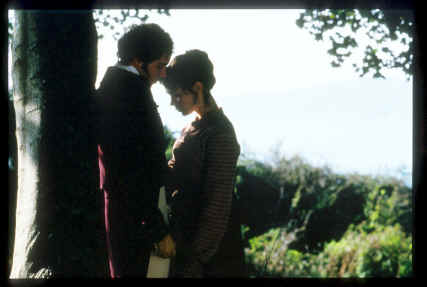
6. Henry Crawford & Fanny Price, from Mansfield Park by Jane AustenStatus: Weren't
Go ahead, hard-core Austen fans, burn me. I'll probably have to trash my Jane
Austen fan card anyway.
Austen fan card anyway.
In my defense, I believe that Henry really loved her. He was willing to marry her, for goodness' sake. Marriages without love existed, but I am a firm believer in his ability to love her. Putting out money to further her brother's career, visiting her in Portsmouth where she had been exiled, offering her, in essence, a better life.
Now, I know you shouldn't marry for money or power and I know that Fanny did not
respect Henry. She didn't love him, but in my world they would have had a lovely life together. He would (slightly) reform while staying his usual charming self. Fanny would chill out and maybe loosen up a bit.
respect Henry. She didn't love him, but in my world they would have had a lovely life together. He would (slightly) reform while staying his usual charming self. Fanny would chill out and maybe loosen up a bit.
I like the story of Mansfield Park, in general. I'm a huge Austen fan, having read all six of the novels and seen many, many movie adaptions. I fell in love with one particular scene in an adaption of Mansfield Park in which Henry comes to Portsmouth to see her and she's just so, so happy. I like to think that she's in love with him too, but is just too scared of his reputation.
7. Catherine Linton Heathcliff & Hareton Earnshaw, from Wuthering Heights by Emily
Bronte
Bronte
Status: Were
I was angry when I watched a movie adaption of Wuthering Heights and it completely omitted the next generation. I mean, these two make the book worth reading. Old Cathy is a crazy b*tch, Heathcliff is creepy and mean, and the other characters are just so strange and mean. Catherine and Hareton are the victims in the story, made to be the puppets of Cathy's memory and Heathcliff's revenge.
It's just so romantic, the story of the moors.
I began by hating Wuthering Heights, but I learned to love it, just for the pure reason that it showed me the power of passion.
But passion is not everything, and seeing the relationship of Catherine and Hareton
was an enlightening experience. They showed me corrupted innocence and shy
love. It was magnificent and terrible all at the same time.
It's just so romantic, the story of the moors.
I began by hating Wuthering Heights, but I learned to love it, just for the pure reason that it showed me the power of passion.
But passion is not everything, and seeing the relationship of Catherine and Hareton
was an enlightening experience. They showed me corrupted innocence and shy
love. It was magnificent and terrible all at the same time.
8. Septimus Hodge & Thomasina Coverly, from Arcadia by Tom Stoppard
Status: Were
I usually don't get into written plays (I prefer to watch), but this one just spoke to me.
Recently I've begun some work on the first scene for a Theatre class. For our final project, I'm directing the opening scene in which Thomasina desperately tries to obtain Septimus' attention, but he's so wrapped up in reading a new poem and criticizing its author that he doesn't pay her too much mind. The scene is hilarious, complete with the author of the poem, Mr. Chater, arriving on the scene and demanding a fight from Septimus, as Septimus has slept with Chater's wife. Septimus gets the addle-brained Chater turned around quite quickly, and is victorious.
While the play is witty and completely wonderful, it's also a sad commentary - for me, at least - of the situation of the Thomasina as a young girl on a British estate in 1809. She's not of much consequence, and everyone in that era sees her as inferior, when they deign to see her at all. She's very much a little brat, but mostly because she doesn't know how else to demand attention; even throwing fits does not garner much in the way of people's attention.
As far as Septimus and Thomasina as a couple go, at the end of the play she's sixteen to his twenty-five (not so scandalous for the time period, let me assure you) and they've finally fallen in love. Now, I won't spoil the angsty conclusion of the play's events for you (for, once you get to the end of the play, you see how every action having taken place has come to point at this one moment), but their love was something nice. They finally got through all of the obstacles of their own affections and knew what they wanted.
9. Violet Baudelaire & Quigley Quagmire, from The Slippery Slope of the Series ofUnfortunate Events by Lemony Snicket
Status: Were (for a short while)
This girl just needs some love.
I cry every time I read one of the books from A Series of Unfortunate Events. They all just make me so miserable. However, I will say that Lemony Snicket has an unparalleled humor and I learned a great multitude of SAT-esqe words from those novels.
The point of my adding these two to the list, in essence, is because Violet is a very brave girl who had been through a very bad time and really, really needed someone to love.
10. Gabriel & Vivian, from Blood and Chocolate by Annette Curtis Klause
Status: Were
I'm just glad she went with the other werewolf.
Huge fan of the book Blood and Chocolate. It was there before the Twilight madness and it will always be one of my favorite romance novels. Vivian is not one of my favorite characters of all time (she's another crazy one), but her situation is one that is so addicting to read. It's all drama and danger and hope and fear, but at the end, it's just her and her decisions, standing by themselves. And I like that she was able to stand by those decisions.
Now, Viv and Gabe as a couple is just sexy. The age difference is not a big deal, once you consider the type of community that they live in and the different things that are expected of them as opposed to those expected of humans. They're another couple where the passion and tension just makes them so great together. I really would like to see the movie to compare, but from what I've heard, it's not a faithful representation. I love reading about their encounters because it's all Fate v. Vivian, see who wins and where her heart will land.
They're so epic in my eyes because of everything they went through, including her rejection by a human who she was in love with. That part was sad and depressing, but I think in Gabriel she found a much more loving and understanding partner. It's so non-Romeo and Juliet that I couldn't help but enjoy. They are of the same breed, so he understands her and is not afraid of her, as Adrian had been. They seemingly destined for each other, as she accidentally duked it out for the title of Alpha Queen.
And sometimes, you need someone who can completely understand you, someone Fate has picked out for you.
Bonus! Extra-Bitter-Never-Were-Couple: Jacob Black and Leah Clearwater, from the Twilight Saga by Stephanie Meyer.
One word: Renesme.
Okay, more than one word.
Okay, more than one word.
What the hell were you thinking, Stephanie Meyer?
What's wrong with Leah Clearwater, and why did you have to make her so unhappy? If she had ended up with Jacob, she'd have had a great chance at happiness. Who cares if Bella's lovely little world was not complete? What if, for once, someone in that series other than Bella got a nice life?
May I congratulate you for making the world's most popular Mary Sue?
But back to Jake and Leah as a WonderCouple.
They would have been great. I know a great number of other people gunning for that relationship. It would have made sense with the story, as they spent lots of time bonding after the split from Sam's pack. They were Alpha and Beta, and they had potential as a passionate, powerful couple capable of ripping apart vampires and protecting the reservation.
I feel so bad for both Leah and Jacob. She was first dumped for her cousin because it wasn't in the stars and then she became the "genetic dead-end" as the only female werewolf. From there it only went down-hill, what with having to deal with all of the males in the pack, including Sam. She just had been dealt such a crap hand in life that you would have thought that a really great love story would have been in order.
Even if it hadn't been great, I would have been happy. They didn't need anything epic, they just needed to be satisfied and in love. I mean, COME ON, everyone in the series is happy EXCEPT Leah in the end.
Even if it hadn't been great, I would have been happy. They didn't need anything epic, they just needed to be satisfied and in love. I mean, COME ON, everyone in the series is happy EXCEPT Leah in the end.
My name is Christina and I support werewolf love.
Wednesday, October 21, 2009
The Vampire and the Modern Girl
Bella and Edward. Sookie and Bill. Raven and Alexander.
 It seems like today's popular books, TV shows, and movies are all about vampires. Sparkly and non-sparkly, the couples I mentioned earlier - from the Twilight Series, the Southern Vampire Mystery Series, and the Vampire Kisses series, respectively - all have the same basic premise: a human girl falls (usually pretty darn hard) for a male vampire, then proceeds to get into all sorts of shenanigans because of the male vampire.
By "shenanigans," I mean that the human girl is pursued by other vampires because of her relationship with the male vampire. For example, Twilight's Bella is chased all over because her blood "smells good" to other vampires, which she would never have come into contact with except that her boyfriend happens to be a bloodsucker as well. Similarly, Vampire Kisses' Raven is pursued by Alexander's rivals for various reasons, from one being in love with her to another believing that she is actually a vampire to another blaming her for something beyond her control.
But let's take a little trip back to look at the origins of the vampire in literature.
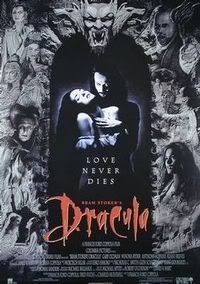 Though he didn't invent the vampire - not by a long shot - Bram Stoker, an Irish author, is widely attributed with setting off the popularity of the vampire in modern literature. Count Dracula was based on a wide variety of oral legends and historical fact. One legend that Dracula was based on was the Irish stories of the sidhe, which, according to Wikipedia's Dracula article, included some blood-drinking women.
But the legends aren't as interesting as the historical people on whom Dracula's legend was based.
The most widely-known of the references is Vlad III Dracula, also known as Vlad the Impaler. Mr. the Impaler is believed to have killed between 40,000 and 100,000 European citizens by impaling them upon sticks. "Dracula" here is a name that means "son of Dracul," a name earned by his father Vlad II Dracul who was inducted into the Order of the Dragon (a secret society from which the name "Dracul" or "dragon" was derived.)
The second reference, not as widely known and only speculated at by literary analysists, is a Hungarian woman known as Countess Elizabeth Bathory, who killed between 36 and 700 young women during her lifetime - reportedly in order to "bathe in their blood" to preserve her youth and beauty. Bathory was featured in the video game slasher film Stay Alive, where many readers might remember her from.
The vampire in literature therefore comes from a very bloody and violent background. Very Halloween-appropriate. But when it comes to today's popular romantic literature, the background of the vampire starts making a person wonder what the heck happened.
 Vampires represent the most bloody, selfish and senseless violence in literature: men who kill those he finds troublesome or useless, women who care only for their own beauty and youth.
But that selfishness in itself may be represented in the selfishness of the heroines.
In Twilight, Bella leaves behind her mother and all of her friends when she becomes a vampire, only contacting her father because she has a child. In Vampire Kisses, Raven wants nothing more than to become a vampire, despite Alexander's warnings that it's not as fun as it seems.
Growing up in the "Me" generation, I know that most people my age think of little beyond their own instant gratification, and the latest wave in popular books only tells me that it's not going to end any time soon.
It seems like today's popular books, TV shows, and movies are all about vampires. Sparkly and non-sparkly, the couples I mentioned earlier - from the Twilight Series, the Southern Vampire Mystery Series, and the Vampire Kisses series, respectively - all have the same basic premise: a human girl falls (usually pretty darn hard) for a male vampire, then proceeds to get into all sorts of shenanigans because of the male vampire.By "shenanigans," I mean that the human girl is pursued by other vampires because of her relationship with the male vampire. For example, Twilight's Bella is chased all over because her blood "smells good" to other vampires, which she would never have come into contact with except that her boyfriend happens to be a bloodsucker as well. Similarly, Vampire Kisses' Raven is pursued by Alexander's rivals for various reasons, from one being in love with her to another believing that she is actually a vampire to another blaming her for something beyond her control.
But let's take a little trip back to look at the origins of the vampire in literature.
Though he didn't invent the vampire - not by a long shot - Bram Stoker, an Irish author, is widely attributed with setting off the popularity of the vampire in modern literature. Count Dracula was based on a wide variety of oral legends and historical fact. One legend that Dracula was based on was the Irish stories of the sidhe, which, according to Wikipedia's Dracula article, included some blood-drinking women.But the legends aren't as interesting as the historical people on whom Dracula's legend was based.
The most widely-known of the references is Vlad III Dracula, also known as Vlad the Impaler. Mr. the Impaler is believed to have killed between 40,000 and 100,000 European citizens by impaling them upon sticks. "Dracula" here is a name that means "son of Dracul," a name earned by his father Vlad II Dracul who was inducted into the Order of the Dragon (a secret society from which the name "Dracul" or "dragon" was derived.)
The second reference, not as widely known and only speculated at by literary analysists, is a Hungarian woman known as Countess Elizabeth Bathory, who killed between 36 and 700 young women during her lifetime - reportedly in order to "bathe in their blood" to preserve her youth and beauty. Bathory was featured in the video game slasher film Stay Alive, where many readers might remember her from.
The vampire in literature therefore comes from a very bloody and violent background. Very Halloween-appropriate. But when it comes to today's popular romantic literature, the background of the vampire starts making a person wonder what the heck happened.
Vampires represent the most bloody, selfish and senseless violence in literature: men who kill those he finds troublesome or useless, women who care only for their own beauty and youth.But that selfishness in itself may be represented in the selfishness of the heroines.
In Twilight, Bella leaves behind her mother and all of her friends when she becomes a vampire, only contacting her father because she has a child. In Vampire Kisses, Raven wants nothing more than to become a vampire, despite Alexander's warnings that it's not as fun as it seems.
Growing up in the "Me" generation, I know that most people my age think of little beyond their own instant gratification, and the latest wave in popular books only tells me that it's not going to end any time soon.
Saturday, October 10, 2009
Bran Hambric: The Farfield Curse by Kaleb Nation
Sometimes, a book stands on its own, completely aloof from its author. Bran Hambric is not one of those books.
Some people know author Kaleb Nation from his blog, KalebNation.com. Others know him as popular Twilight blogger/vlogger The Twilight Guy. However you've heard of him, the twenty-one-year-old is starting to become more and more popular in media across the United States, starting with his former radio host career.
A lot of things about Bran Hambric are much funnier when you've read even a few blog posts or watched a few of Nation's videos on his YouTube channel, which at the time of this writing has over 39,000 subscribers. For example, knowing about Nation's fondness for gnomes makes even the slightest mention of a gnome in Bran Hambric: The Farfield Curse even more hilarious.
Not that The Farfield Curse lacks in humor in any way, shape or form. Nation's humor is similar to that of Kaza Kingsley of Erec Rex fame or even Lemony Snicket, author of bestselling A Series of Unfortunate Events novels. In particular, I thought that the fantastical humor of The Farfield Curse was similar to the jokes in J. K. Rowling's Harry Potter and the Sorceror's Stone, a favorite and bestseller across the world.
Bran Hambric: The Farfield Curse is a novel for middle-grade readers, appropriate for readers above the age of twelve. (There's a little bit of violence - a shooting in the prologue - and though the description is not graphic at all, it still requires a little bit of maturity from a reader.) However, don't let the middle-grade label stop any older readers from picking up a copy of Bran Hambric. The book is based on a fascinating premise: what if your mother was a criminal? What if her crime was magic? And, most fascinating - what if you inherited her magic?
The book turns darker towards the end with a twist very like a popular YA novel that shall remain nameless, but the book remains believeable - the relationship between Bran and his mother-aunt figure Rosie is touching, just as the very bizarre relationship Bran has with his adoptive family will entice giggles from readers young and old.
In conclusion, Bran Hambric is a creative and clever novel appropriate for younger readers and even better for older readers. The novel was published on September 9, 2009 by indie publisher Sourcebooks Jabberwocky and has since become one of the most popular indie printer books of the year. Order your copy at Amazon.com or learn more at the Bran Hambric website.
And, by all means, check out one of the author's popular blogs. He is, after all, a pretty darn funny guy.
Some people know author Kaleb Nation from his blog, KalebNation.com. Others know him as popular Twilight blogger/vlogger The Twilight Guy. However you've heard of him, the twenty-one-year-old is starting to become more and more popular in media across the United States, starting with his former radio host career.
A lot of things about Bran Hambric are much funnier when you've read even a few blog posts or watched a few of Nation's videos on his YouTube channel, which at the time of this writing has over 39,000 subscribers. For example, knowing about Nation's fondness for gnomes makes even the slightest mention of a gnome in Bran Hambric: The Farfield Curse even more hilarious.
Not that The Farfield Curse lacks in humor in any way, shape or form. Nation's humor is similar to that of Kaza Kingsley of Erec Rex fame or even Lemony Snicket, author of bestselling A Series of Unfortunate Events novels. In particular, I thought that the fantastical humor of The Farfield Curse was similar to the jokes in J. K. Rowling's Harry Potter and the Sorceror's Stone, a favorite and bestseller across the world.
Bran Hambric: The Farfield Curse is a novel for middle-grade readers, appropriate for readers above the age of twelve. (There's a little bit of violence - a shooting in the prologue - and though the description is not graphic at all, it still requires a little bit of maturity from a reader.) However, don't let the middle-grade label stop any older readers from picking up a copy of Bran Hambric. The book is based on a fascinating premise: what if your mother was a criminal? What if her crime was magic? And, most fascinating - what if you inherited her magic?
The book turns darker towards the end with a twist very like a popular YA novel that shall remain nameless, but the book remains believeable - the relationship between Bran and his mother-aunt figure Rosie is touching, just as the very bizarre relationship Bran has with his adoptive family will entice giggles from readers young and old.
In conclusion, Bran Hambric is a creative and clever novel appropriate for younger readers and even better for older readers. The novel was published on September 9, 2009 by indie publisher Sourcebooks Jabberwocky and has since become one of the most popular indie printer books of the year. Order your copy at Amazon.com or learn more at the Bran Hambric website.
And, by all means, check out one of the author's popular blogs. He is, after all, a pretty darn funny guy.
Thursday, October 1, 2009
My Top 10 Fictional Couples That Ever Were (Or Weren't) [Pt. 1]
Warning! There will be spoilers in this blog, so don't read unless you're okay with finding out a bit about a book.
In many of the books out in the world there is a power-couple. In the ever-popular and ever-romantic Pride and Prejudice we see one of the most epic couples that ever lived in the pages of a novel: Mr. Darcy and Lizzy Bennet. In the phenomenal series Harry Potter, the hero and title character ends up with Ginny Weasley. In the ever-mocked Twilight (which was once an exceptional book by my standards, until I discovered there was a sequel) there is Bella and Edward, who become an eternal annoyance by the end of Breaking Dawn. These three are just examples of leading epic couples.
Honestly, I'm not impressed. There's just something about the characters with a bit more mystery, whose life you haven't followed with a rabid fascination while tearing through the pages of a book, that sparks a curiosity towards their love life.
This blog is an ode to all the couples from more obscure books, or couples that in themselves are more obscure. I do indeed involve leading characters, and there is one epic couple that most people have never heard of, unless you're a Tamora Pierce fan like myself.
Another aspect of this blog is that of the couples I wish had existed, and one that I'm speculating on. There are many possibilities after you close the book and I'm willing to let my mind wander.
1. Alanna of Trebond and Olau & George Cooper, from the Song of the Lioness Quartet by Tamora Pierce
Status: Were
This would be my epic leading couple from the series. They're my absolute favorite couple of all ficitional times.
Originally in the Alanna quartet, Tamora Pierce had married Alanna to Prince Jonathan, her romantic interest in the first two books. Thank goodness something made her change her mind, because I'd probably be very angry at the never-were-ness of it all.
Alanna and George have such a strong, passionate love that it makes me smile every time I read the books. I love how even at the beginning George saw potential in her and a future relationship, and it was Alanna who had to fight her own inner battles before coming to grips with true love. I mean, it's her series so she gets all the good inner battles. Between hiding her identity, coming to terms with her new-found sexuality, fighting the bad guys, and saving the realm, she manages to find time for personal relationships.
After being with Prince Jon (gag me) and Liam the Shang Dragon (he was pretty B.A., but he died), she finally finds comfort in George. What I love most about this couple is that they went through hell to get each other and survived.
2. Theodore "Teddy" Lawrence & Josephine March, from Little Women by Louisa May Alcott
Status: Weren't
Oh, boy. This is the one book that I refuse to accept the ending.
I was about ten when I first read Little Women. You could not imagine my disappointment when I read the scene of Jo's final rejection of Teddy, and he left for Europe. I was so convinced that she was making a mistake and had this crazy hope through the rest of that ridiculously long book that Teddy would come back and she would finally fall in love with him.
I guess overall I just don't like the book very much. As much as I want to think good things come to good people, I learned a few things. One, the blonde girl gets the amazing man. Two, only the good die young, as Billy Joel told us. Three, if someone burns the only copy of your masterpiece, you better be in for a ton of pain when everyone tells you it was your fault.
So, years later, I've decided that Little Women is not a book that I enjoy. Meg and John are the only couple I'm satisfied with throughout the actual plot. I am, so ever deeply, part of the sect of Little Women readers that are all for Teddy and Jo getting married and having a bunch of little misfits together.
3. Rose Weasley & Scorpius Malfoy, from Harry Potter and the Deathly Hallows by J. K. Rowling
Status: Very Possibly May Be
She set herself up for this one.
Perhaps it's because I've read one too many FanFictions about this cute little pairing, but they make me so happy to think about. My personal belief is that she was foreshadowing when Ron Weasley told his eleven-year-old daughter that "Grandad Weasley would never forgive you if you married a pure-blood" in the epilogue. Think about it: Harry was much more forgiving of Draco Malfoy during the seventh book. He had seen more of what Malfoy had to deal with at home and under the rule of the Dark Lord, so he had more compassion for him. Ron, on the other hand, hated the ferret. In the second book, he tried to hex Malfoy for insulting Hermione. In the seventh book, during the battle, Ron punches Malfoy after he and Harry save him. He has a lot more hate for Malfoy than Harry does. It makes for great drama.
He'd want his baby girl far, far away from Malfoy's kid, but you know that's not how great stories work. I see these two starting out hating each other but, having mutual friends and/or responsibilities, they become friends. Then from there, it becomes Ron's worst nightmare.
4. Magnus Bane & Alec Lightwood, from the Mortal Instruments series by Cassandra Clare
Status: Were
I was so proud of this popular book series for creating a gay couple. For this sort of thing to come out into popular culture means we're one step closer to wide-spread acceptance.
In a story that pushes some serious boundaries (siblings in love with each other, true evil, twisted relationships, and a homosexual relationship) this couple becomes the real thing when Jace and Clary's issues become resolved and the dark side is defeated. As it turns out, the siblings aren't really siblings, so the incest problem is out the window. Clary's real, evil, and twisted brother is killed along with the main villain, her father Valentine.
In a story that pushes some serious boundaries (siblings in love with each other, true evil, twisted relationships, and a homosexual relationship) this couple becomes the real thing when Jace and Clary's issues become resolved and the dark side is defeated. As it turns out, the siblings aren't really siblings, so the incest problem is out the window. Clary's real, evil, and twisted brother is killed along with the main villain, her father Valentine.
Though they have their ups and downs, in the end Alec gives up on keeping his orientation from his parents and reveals his love of Magnus. Surprising as this is to Magnus himself, he responds rather enthusiastically and they become the first gay couple I've ever had the pleasure of reading about in a mainstream novel. In different books I've come across gay minor characters whose relationships the reader doesn't really see, but in the Mortal Instruments Cassandra Clare puts two important characters into the limelight with their relationship.
What makes them an even more epic couple than the tortured Jace Wayland and Clary Fray is that their love is different. Alec has to overcome his own love of Jace to be able to see what an amazing thing he has with Magnus. He also has to brave the censure and judgement of his parents and all the other Shadownhunters. What makes them epic is that they battle not only demons, but their very world.
Wednesday, August 19, 2009
Just One Wish by Janette Rallison
I must say, Jeremy Truman's taste in TV shows is rather fabulous. When I was six, my favorite show was Blue's Clues. His favorite show is Teen Robin Hood, which I'm assuming shows the start of his take-from-the-rich, give-to-the-poor career. Teen Robin Hood shoots arrows at the bad guys while saving Maid Marion from danger, and he always manages to make the world a better place. What a role model, I must say, for any young boy.
Every week my little brother and I head to our local branch of the library. It's literally just up the street from us, and we walk or bike. That's where we go to get our books and CDs for entertainment. Even though we have DVR, about 100 channels, and three computers in our house, we were brought up to have an imagination. Reading is always a favorite passtime in our family.
My brother is four years younger than me. I was in preschool when he was born. While he and Feliza fight like cats and dogs, I'm more of the peace-keeper. I get along with both of them.
 If one of my siblings ever developed a possibly terminal illness like cancer, I think I'd be a little like Annika, the protagonist of Just One Wish. I'd want to be able to do anything to make them happy, so that their time left was nice.
In this book, Annika shows a lot of courage, which I admire, even though she sometimes should think her plans through. I don't know how if I'd be that stupid or crazy compassionate about getting my siblings their wish. I definitely wouldn't drive to California and stalk a famous actor for them. Mostly because I live across the country, but also because it's a little bit
reckless and a lot bit stupid.
reckless and a lot bit stupid.
I know her heart is in the right place, and I have been known to do things spontaneously, but there are certain things - illegal things - that sometimes you shouldn't cross the line for.
Overall, though, the book is pretty awesome. A good mix of romance, adventure, fast cars, good will, and family love. It's an interesting read, with lots to think about God and the goodness in the world.
Annika is "not speaking" to God because she asked him to save her brother if He loved her. You know, not the best idea. I'm of the opinion that God doesn't take bribes. Sometimes you just have to go out on a limb and have faith that you'll make it through, and sometimes you just have to accept that God has others plans. According to Billy Joel, "Only the good die young." Maybe that's how it is in life. Annika's brother is an innocent six-year-old who idolizes a TV character that is all about doing good in the world and helping people who are oppressed and defenseless. He tries to do what's good for his family by wishing them to be happy and not for his own recovery. It shows a strength of mind and an acceptance of God's will to be able to be a first grader and sacrifice your own health for those you care about.
If you have a sibling and love them, read this. It puts into perspective the fact that they're in your life and what they mean to you. I'd miss my siblings terribly. Heck, I'm already going to miss my sister when she moves out to live on campus in the fall. Life is short, so spend it with the people you care about.
Saturday, August 1, 2009
If the Witness Lied by Caroline B. Cooney
Sometimes, when I flick through channels on TV and find one of those ridiculous celebrity-hounding shows, I wonder what it might be like to live life in the public spotlight. Actors, musicians, politicians - there are many figures that are thrust, sometimes unwillingly, into a very public life.
The most tragic of these, however, are the normal, everyday people who do something "extraordinary" enough to be hounded by the media. The people who are massively obese, those whose penchant for plastic surgery makes them some strange source of public amusement, and those whose lives are torn apart by such tragedy that all the public can do is look on in horror.
 YA thriller mastermind Caroline B. Cooney explores the topic with her newest release, If the Witness Lied. The story is about several teenage characters - Jack, Smithy, and Madison Fountain - but the novel truly revolves around three-year-old Tristan, the youngest member of the Fountain family who has reputedly "killed" both of his parents.
Cooney, author of young adult classics such as The Face on the Milk Carton and I Know What You Did Last Summer, ties together her latest teen thriller with delicate threads that weave in and out of the story. Learning the Fountains' tragic past is nearly as thrilling as the adventure that begins when Jack picks Tris up from daycare one day.
The story begins when Jack skips school to save his dead father's precious work boots from his "Aunt Cheryl" and her cleaning binges. After sneaking into his own house, he overhears Cheryl having a meeting with a television producer. Cheryl plans to have Tris and the family filmed for an emotional television series - one that will bring Tris eternally into the spotlight, blamed for his parents' deaths.
From there, the novel launches into the thrilling story of how Jack, his sisters Smithy and Madison, and the family friend Diana save Tris from a televised fate - and the solution to their question, "if the witness lied," will blow your mind.
The final verdict: If you've read and liked any of Caroline B. Cooney's other thrillers - particularly I Know What You Did Last Summer - then you'll love If the Witness Lied. I adored both myself. This book may also be good for YA fans of novelist James Patterson.
The most tragic of these, however, are the normal, everyday people who do something "extraordinary" enough to be hounded by the media. The people who are massively obese, those whose penchant for plastic surgery makes them some strange source of public amusement, and those whose lives are torn apart by such tragedy that all the public can do is look on in horror.
YA thriller mastermind Caroline B. Cooney explores the topic with her newest release, If the Witness Lied. The story is about several teenage characters - Jack, Smithy, and Madison Fountain - but the novel truly revolves around three-year-old Tristan, the youngest member of the Fountain family who has reputedly "killed" both of his parents.Cooney, author of young adult classics such as The Face on the Milk Carton and I Know What You Did Last Summer, ties together her latest teen thriller with delicate threads that weave in and out of the story. Learning the Fountains' tragic past is nearly as thrilling as the adventure that begins when Jack picks Tris up from daycare one day.
The story begins when Jack skips school to save his dead father's precious work boots from his "Aunt Cheryl" and her cleaning binges. After sneaking into his own house, he overhears Cheryl having a meeting with a television producer. Cheryl plans to have Tris and the family filmed for an emotional television series - one that will bring Tris eternally into the spotlight, blamed for his parents' deaths.
From there, the novel launches into the thrilling story of how Jack, his sisters Smithy and Madison, and the family friend Diana save Tris from a televised fate - and the solution to their question, "if the witness lied," will blow your mind.
The final verdict: If you've read and liked any of Caroline B. Cooney's other thrillers - particularly I Know What You Did Last Summer - then you'll love If the Witness Lied. I adored both myself. This book may also be good for YA fans of novelist James Patterson.
Saturday, July 18, 2009
The Truth About Forever by Sarah Dessen
Last month my grandpa died. He was one of the most important people in my family, as my dad's from the Philippines and my mom's family mostly live here. My grandpa has been here for almost every birthday, Christmas, Easter, Thanksgiving, and the random weekends in between for my family. He and my grandma were married in 1948 and celebrated their sixtieth anniversary this past October. While it wasn't a shock that he died (he had a stroke practically on my sixth birthday), we all still went through the grieving process.
 It seemed appropriate, then, that I read The Truth About Forever by Sarah Dessen. In it, the protagonist Macy is still grieving over her own father's death that occurred about a year before the start of the book. When I read about her reaction to seeing her father's belongings, I realized that that was what the pangs I felt going into my grandmother's house were, seeing his armchair empty and the TV on at a reasonable level. I miss him a lot.
My summer started off with such a fabulous beginning, what with my grandpa dying about two weeks after I got out of school. Then with the job hunt and boyfriendlessness hanging over me, I try my hardest to find books that I can escape into. I've always had a thing for fantasy books - magic, monsters, heroes, and true love don't always have a place in my real life, so finding them in books ensured a small detour from my crazy schedule.
I borrowed The Truth About Forever from my best friend. I spent the night at her house a weekend or so ago and we sat around reading books - believe me, this is actually normal for us. I was delving into The City of Glass when she leaned over and told me I should read this other book, because, well, it was really Jada's, but it's really good. So I took it home and a few days ago I finally got around to reading it. And let me tell you, if I find it anywhere, I'm buying it.
It's a good summer read for girls who have had a terrible job, have been a dependent in a relationship, who have lost someone they love. My love life has been rather unsatisfactory, but being in Macy's head when she thinks about being perfect and missing someone, I could relate. I'm an almost-perfectionist myself, what with a crazy school schedule and a lot of extracurricular activities scattered across the year. The stress can really do some scary things to a girl, and this novel gave me some frightening flashbacks to my sophomore year.
But no matter what, one thing this book teaches is that opportunities will present themselves at the oddest times, and sometimes we just have to roll with them. A job might suddenly open up, and while it's not something we're familiar with, we'll take the leap of faith and try to enjoy the ride. New people walk into our lives, sometimes helping to fill the void left by people who have left our lives, whether in death or in moving away from us in the literal or figurative sense.
It seemed appropriate, then, that I read The Truth About Forever by Sarah Dessen. In it, the protagonist Macy is still grieving over her own father's death that occurred about a year before the start of the book. When I read about her reaction to seeing her father's belongings, I realized that that was what the pangs I felt going into my grandmother's house were, seeing his armchair empty and the TV on at a reasonable level. I miss him a lot.My summer started off with such a fabulous beginning, what with my grandpa dying about two weeks after I got out of school. Then with the job hunt and boyfriendlessness hanging over me, I try my hardest to find books that I can escape into. I've always had a thing for fantasy books - magic, monsters, heroes, and true love don't always have a place in my real life, so finding them in books ensured a small detour from my crazy schedule.
I borrowed The Truth About Forever from my best friend. I spent the night at her house a weekend or so ago and we sat around reading books - believe me, this is actually normal for us. I was delving into The City of Glass when she leaned over and told me I should read this other book, because, well, it was really Jada's, but it's really good. So I took it home and a few days ago I finally got around to reading it. And let me tell you, if I find it anywhere, I'm buying it.
It's a good summer read for girls who have had a terrible job, have been a dependent in a relationship, who have lost someone they love. My love life has been rather unsatisfactory, but being in Macy's head when she thinks about being perfect and missing someone, I could relate. I'm an almost-perfectionist myself, what with a crazy school schedule and a lot of extracurricular activities scattered across the year. The stress can really do some scary things to a girl, and this novel gave me some frightening flashbacks to my sophomore year.
But no matter what, one thing this book teaches is that opportunities will present themselves at the oddest times, and sometimes we just have to roll with them. A job might suddenly open up, and while it's not something we're familiar with, we'll take the leap of faith and try to enjoy the ride. New people walk into our lives, sometimes helping to fill the void left by people who have left our lives, whether in death or in moving away from us in the literal or figurative sense.
Wednesday, July 8, 2009
xxxHolic: AnotherHolic by Nisioisin
CLAMP has got to be one of my favorite manga groups that ever existed. Not that I've ever read any other manga that a group did; usually I read those single-artist jobs. But I'm a pretty decent CLAMP fan: I loved Cardcaptor Sakura, and my favorite manga of all time is Tsubasa RESERvoiR CHRoNiCLE. So when my boyfriend and I were at the anime store the other day and saw xxxHoLic: AnotherHoLic sitting on the shelv, I practically fainted.
 xxxHoLic is CLAMP's companion series to Tsubasa RESERvoiR CHRoNiCLE, set during the same time and parallel to TRC. The two main characters - Watanuki and Yuuko - both appear in TRC, though xxxHoLic is at once less serious and more philosophical than TRC.
I'm rambling. Regardless of its background, xxxHoLic: AnotherHoLic isn't another manga or graphic novel: it's a novel written by pop author Nisioisin, who wrote and released Death Note: Another Note around the same time as xxxHoLic: AnotherHolic. He's done some other stuff, but nothing I recognize in particular.
The novel is split up into three parts: OuterHoLic, InnerHoLic, and OtherHoLic. The first short story is about teenage Kimihiro Watanuki (that's in Western-style, with his given name first), who works for the Dimension Witch Yuuko in order to rid himself of his supernatural ability to see spirits. Watanuki is assigned to purchase a cheap pair of fake glasses. He thought it was just something weird that Yuuko wanted - she often asks ridiculous things of him - until he sees a young woman throw herself in front of a moving scooter.
The second part, InnerHoLic, revolves around the mysterious case of a woman receiving text messages from her dead friend. This part of the book was, by far, my favorite. While all of the parts made me think, this one made me think the most. It brought this to mind: when a friend dies, do we mourn for their sake, or for our own? Is our mourning simply something selfish? Or is it something more?
The third part, OtherHoLic, brings another young man into play, one searching for Watanuki and trying to recruit his "awesome eyes." Watanuki finds something about him very repellant, but there's much more to him than meets the eye.
Final Say: Overall, I think I'd give the book a good rating. It wasn't as good as the original manga series - though its story line was different than any of the manga - but for a stand-alone book, it was pretty good. My only issue was the loss in translation: there's a lot of wordplay in xxxHoLic that simply can't be translated into English. I'd recommend xxxHoLic: AnotherHoLic to all CLAMP fans and those interested in Japanese lore. If you're not into that kind of thing, though, this might be a good book to skip.
xxxHoLic is CLAMP's companion series to Tsubasa RESERvoiR CHRoNiCLE, set during the same time and parallel to TRC. The two main characters - Watanuki and Yuuko - both appear in TRC, though xxxHoLic is at once less serious and more philosophical than TRC.I'm rambling. Regardless of its background, xxxHoLic: AnotherHoLic isn't another manga or graphic novel: it's a novel written by pop author Nisioisin, who wrote and released Death Note: Another Note around the same time as xxxHoLic: AnotherHolic. He's done some other stuff, but nothing I recognize in particular.
The novel is split up into three parts: OuterHoLic, InnerHoLic, and OtherHoLic. The first short story is about teenage Kimihiro Watanuki (that's in Western-style, with his given name first), who works for the Dimension Witch Yuuko in order to rid himself of his supernatural ability to see spirits. Watanuki is assigned to purchase a cheap pair of fake glasses. He thought it was just something weird that Yuuko wanted - she often asks ridiculous things of him - until he sees a young woman throw herself in front of a moving scooter.
The second part, InnerHoLic, revolves around the mysterious case of a woman receiving text messages from her dead friend. This part of the book was, by far, my favorite. While all of the parts made me think, this one made me think the most. It brought this to mind: when a friend dies, do we mourn for their sake, or for our own? Is our mourning simply something selfish? Or is it something more?
The third part, OtherHoLic, brings another young man into play, one searching for Watanuki and trying to recruit his "awesome eyes." Watanuki finds something about him very repellant, but there's much more to him than meets the eye.
Final Say: Overall, I think I'd give the book a good rating. It wasn't as good as the original manga series - though its story line was different than any of the manga - but for a stand-alone book, it was pretty good. My only issue was the loss in translation: there's a lot of wordplay in xxxHoLic that simply can't be translated into English. I'd recommend xxxHoLic: AnotherHoLic to all CLAMP fans and those interested in Japanese lore. If you're not into that kind of thing, though, this might be a good book to skip.
Subscribe to:
Posts (Atom)