I must say, Once Dead, Twice Shy by Kim Harrison was a bit of a disappointment. With the basic premise (dead girl who created a fake body with a stolen amulet tries to navigate normal life while light and dark reapers flit about her world) and the pretty cover (black and white photo, cool hair and eye make-up on the girl), I was expecting a much more exciting book. However, I had to practically force myself to plow my way through 232 pages of bland writing, under-developed characters, and a decidedly unharrowing plot.
One interesting thing that the book brings to the table is the idea that light is good and dark is bad. Most generally take that assumption and run with it, generally not questioning it. Even in its ridiculous abruptness, the story questions our idea of right and wrong, along with the argument over fate versus free will. Fascinatingly enough, the author chucks this idea in amongst the unimaginative dialogue and definitely-not-the-seat-of-your-pants action.
The protagonist is flat, with very little going on with her besides, of course, being dead, and "just wanting to be myself." Though, as the reading public, there's not a lot to tell us what brand of "me" this girl is. We know she likes purple hair and photography. Greatttt. There's not much else to work with.
Now, the plot was interesting, which is why I finished the book, faulty characters, boring writing, and all. One topic I've been drawn to in recent years is angels; one of my favorite books deals with the idea of floating angels and their role in desperate people's lives (but that's a whole other blog). I had originally been drawn to this book based on the idea of a corporeal body created by an amulet for a dead person and how cool that would be. But the reason I kept reading was the angels. Warrior angels, to be precise, which is probably one of the most bad-ass concepts ever. Avenging angels, epic swords, flowing cloaks, and curses on their enemies - it makes for a really exciting addition to a story. Not to mention that they're un-sexual beings (almost the opposite of hermaphrodites: they don't have a gender at all). They are also doing the work of God in the most direct manner, battling the actual root of the problem - evil in the form of actual demons and fallen angels.
But this book used a different idea of warrior angels, and while Harrison is perfectly at liberty to do that, as it's fiction, I was disappointed in the lack of distinction and attention paid to the angels, called "reapers." The particular brand of angel shown is much like humans but they are supposed to be the fearsome warrior angels who fight over the lives and souls of humans on earth. I don't know if she just didn't make them sound exciting enough, but I was disappointed because of how central of a role they played in the plot, but the best she could do was say they all looked like models, they were so pretty.
Moral of the story: it's a boring book that brings up some interesting points for about five seconds, before spiraling into its blandness once again.
Wednesday, December 30, 2009


Thursday, December 24, 2009
A Game of Thrones by George R. R. Martin
Whether they like it or not, everybody knows what a fairytale is. A story with a good guy, a bad guy, and a problem. The good guy has to solve the problem and defeat the bad guy - or, conversely, defeat the bad guy in order to solve the problem. The ending is always sickeningly good - the good guy saves the day and invariably manages to get the girl, hence the literary term "a fairy-tale ending."
 Unfortunately for all those good guys out there, life is not a fairy tale, and neither is A Game of Thrones by contemporary fantasy master George R. R. Martin. The unnerving realism of Martin's Thrones is the key to this novel, offsetting it from other fantasy epics: rather than a straightforward adventure or quest, the novel follows instead the escapades of three families during a period of political unrest, just before and just after the death of the middleaged king.
The majority of the plot revolves around a few central characters, though my personal favorites are Jon Snow and Daenerys Tarragon.
Jon Snow is the bastard son of one of the main characters, who was brought up in his father's household along with the legitimate children. Though he has the strengths and complexities of a leading character, he is described as homely bordering on ugly. Despite his less-than-heavenly looks and his status as illegitimate, though, Jon is tough as nails and more determined than any other common-born young men, even the legitimate ones. Raised as one of his father's sons, he is actually even a little spoiled - a fact thrown into his face by his commander, who forces him to grow up a little.
Another character I love, Daenerys Tarragon, is another character whose coming-of-age also figures prominently in Thrones. She begins the novel as a cowed young girl who is beaten, ridiculed, and likewise abused by her older brother, who "sells" her into marrying the chief of a nomad clan. The novel becomes slightly graphic while describing Dany's relationship with her husband, but it serves to highlight the difference between her gentle and loving husband, a courageous leader, and her cowardly puke of a brother. Eventually, her husband gives her a confidence all her own, creating in her the "dragon queen" that she was meant to become.
A Game of Thrones is at once a book about politics and a book about human nature, well-crafted by its artist to hone each detail of life in the Seven Kingdoms. Readers will find themselves immersed in the realistic middle-ages lives of the characters, living and dying in a natural pattern that spares none for goodness or nobility.
Critic's Conclusion: Readers of high fantasy will love Martin's modern classic. However, this novel is not for the young or for the casual reader, and those looking for a fairy-tale ending are sure to find themselves disappointed.
Unfortunately for all those good guys out there, life is not a fairy tale, and neither is A Game of Thrones by contemporary fantasy master George R. R. Martin. The unnerving realism of Martin's Thrones is the key to this novel, offsetting it from other fantasy epics: rather than a straightforward adventure or quest, the novel follows instead the escapades of three families during a period of political unrest, just before and just after the death of the middleaged king.The majority of the plot revolves around a few central characters, though my personal favorites are Jon Snow and Daenerys Tarragon.
Jon Snow is the bastard son of one of the main characters, who was brought up in his father's household along with the legitimate children. Though he has the strengths and complexities of a leading character, he is described as homely bordering on ugly. Despite his less-than-heavenly looks and his status as illegitimate, though, Jon is tough as nails and more determined than any other common-born young men, even the legitimate ones. Raised as one of his father's sons, he is actually even a little spoiled - a fact thrown into his face by his commander, who forces him to grow up a little.
Another character I love, Daenerys Tarragon, is another character whose coming-of-age also figures prominently in Thrones. She begins the novel as a cowed young girl who is beaten, ridiculed, and likewise abused by her older brother, who "sells" her into marrying the chief of a nomad clan. The novel becomes slightly graphic while describing Dany's relationship with her husband, but it serves to highlight the difference between her gentle and loving husband, a courageous leader, and her cowardly puke of a brother. Eventually, her husband gives her a confidence all her own, creating in her the "dragon queen" that she was meant to become.
A Game of Thrones is at once a book about politics and a book about human nature, well-crafted by its artist to hone each detail of life in the Seven Kingdoms. Readers will find themselves immersed in the realistic middle-ages lives of the characters, living and dying in a natural pattern that spares none for goodness or nobility.
Critic's Conclusion: Readers of high fantasy will love Martin's modern classic. However, this novel is not for the young or for the casual reader, and those looking for a fairy-tale ending are sure to find themselves disappointed.
Saturday, December 5, 2009
My Top Ten Fictional Couples That Ever Were (Or Weren't) [Pt. 2]
[Editor's Note: Part One can be found here.]
 5. Miroku & Sango, from Inu-Yasha by Rumiko Takahashi
Status: Were
 6. Henry Crawford & Fanny Price, from Mansfield Park by Jane Austen
 9. Violet Baudelaire & Quigley Quagmire, from The Slippery Slope of the Series of
Unfortunate Events by Lemony Snicket
5. Miroku & Sango, from Inu-Yasha by Rumiko TakahashiStatus: Were
One of my first forays into manga, many years ago, involved the Inu-Yasha series. My sister loved it, and I easily got swept into this mega-popular series.
Do you know how funny it is to see a monk madly infatuated with a demon-slayer who ends up beating the crap out of the former? Probably not. That is, unless you have the great fortune of reading the Inu-Yasha series. Miroku and Sango are so epically funny that I just giggle every time I see them.
The funny thing is, though, that once you really get into the series, you see just how much they care about each other. Just because Miroku is a pervert - and not to mention the fact that he has "wandering hands" - doesn't mean that he's not able to love someone deeply. He's always there to catch her if she falls from Kirara or to nurse her back to health if she gets injured. These moments show their tenderness, but there's almost always, without fail, an action that breaks the serious moment and gives some much-needed comic relief. He'll make a grab while she's lying defenseless, and then she beats him down. It's hilarious.
In fact, one of the reasons I chose this couple as a part of my list is because they're not as angsty as Inu-Yasha and Kagome. Sometimes a girl just needs some light-hearted and crack-y love in her reading.
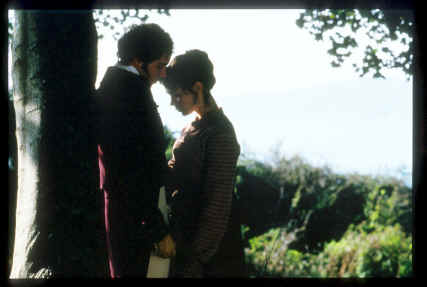
6. Henry Crawford & Fanny Price, from Mansfield Park by Jane AustenStatus: Weren't
Go ahead, hard-core Austen fans, burn me. I'll probably have to trash my Jane
Austen fan card anyway.
Austen fan card anyway.
In my defense, I believe that Henry really loved her. He was willing to marry her, for goodness' sake. Marriages without love existed, but I am a firm believer in his ability to love her. Putting out money to further her brother's career, visiting her in Portsmouth where she had been exiled, offering her, in essence, a better life.
Now, I know you shouldn't marry for money or power and I know that Fanny did not
respect Henry. She didn't love him, but in my world they would have had a lovely life together. He would (slightly) reform while staying his usual charming self. Fanny would chill out and maybe loosen up a bit.
respect Henry. She didn't love him, but in my world they would have had a lovely life together. He would (slightly) reform while staying his usual charming self. Fanny would chill out and maybe loosen up a bit.
I like the story of Mansfield Park, in general. I'm a huge Austen fan, having read all six of the novels and seen many, many movie adaptions. I fell in love with one particular scene in an adaption of Mansfield Park in which Henry comes to Portsmouth to see her and she's just so, so happy. I like to think that she's in love with him too, but is just too scared of his reputation.
7. Catherine Linton Heathcliff & Hareton Earnshaw, from Wuthering Heights by Emily
Bronte
Bronte
Status: Were
I was angry when I watched a movie adaption of Wuthering Heights and it completely omitted the next generation. I mean, these two make the book worth reading. Old Cathy is a crazy b*tch, Heathcliff is creepy and mean, and the other characters are just so strange and mean. Catherine and Hareton are the victims in the story, made to be the puppets of Cathy's memory and Heathcliff's revenge.
It's just so romantic, the story of the moors.
I began by hating Wuthering Heights, but I learned to love it, just for the pure reason that it showed me the power of passion.
But passion is not everything, and seeing the relationship of Catherine and Hareton
was an enlightening experience. They showed me corrupted innocence and shy
love. It was magnificent and terrible all at the same time.
It's just so romantic, the story of the moors.
I began by hating Wuthering Heights, but I learned to love it, just for the pure reason that it showed me the power of passion.
But passion is not everything, and seeing the relationship of Catherine and Hareton
was an enlightening experience. They showed me corrupted innocence and shy
love. It was magnificent and terrible all at the same time.
8. Septimus Hodge & Thomasina Coverly, from Arcadia by Tom Stoppard
Status: Were
I usually don't get into written plays (I prefer to watch), but this one just spoke to me.
Recently I've begun some work on the first scene for a Theatre class. For our final project, I'm directing the opening scene in which Thomasina desperately tries to obtain Septimus' attention, but he's so wrapped up in reading a new poem and criticizing its author that he doesn't pay her too much mind. The scene is hilarious, complete with the author of the poem, Mr. Chater, arriving on the scene and demanding a fight from Septimus, as Septimus has slept with Chater's wife. Septimus gets the addle-brained Chater turned around quite quickly, and is victorious.
While the play is witty and completely wonderful, it's also a sad commentary - for me, at least - of the situation of the Thomasina as a young girl on a British estate in 1809. She's not of much consequence, and everyone in that era sees her as inferior, when they deign to see her at all. She's very much a little brat, but mostly because she doesn't know how else to demand attention; even throwing fits does not garner much in the way of people's attention.
As far as Septimus and Thomasina as a couple go, at the end of the play she's sixteen to his twenty-five (not so scandalous for the time period, let me assure you) and they've finally fallen in love. Now, I won't spoil the angsty conclusion of the play's events for you (for, once you get to the end of the play, you see how every action having taken place has come to point at this one moment), but their love was something nice. They finally got through all of the obstacles of their own affections and knew what they wanted.
9. Violet Baudelaire & Quigley Quagmire, from The Slippery Slope of the Series ofUnfortunate Events by Lemony Snicket
Status: Were (for a short while)
This girl just needs some love.
I cry every time I read one of the books from A Series of Unfortunate Events. They all just make me so miserable. However, I will say that Lemony Snicket has an unparalleled humor and I learned a great multitude of SAT-esqe words from those novels.
The point of my adding these two to the list, in essence, is because Violet is a very brave girl who had been through a very bad time and really, really needed someone to love.
10. Gabriel & Vivian, from Blood and Chocolate by Annette Curtis Klause
Status: Were
I'm just glad she went with the other werewolf.
Huge fan of the book Blood and Chocolate. It was there before the Twilight madness and it will always be one of my favorite romance novels. Vivian is not one of my favorite characters of all time (she's another crazy one), but her situation is one that is so addicting to read. It's all drama and danger and hope and fear, but at the end, it's just her and her decisions, standing by themselves. And I like that she was able to stand by those decisions.
Now, Viv and Gabe as a couple is just sexy. The age difference is not a big deal, once you consider the type of community that they live in and the different things that are expected of them as opposed to those expected of humans. They're another couple where the passion and tension just makes them so great together. I really would like to see the movie to compare, but from what I've heard, it's not a faithful representation. I love reading about their encounters because it's all Fate v. Vivian, see who wins and where her heart will land.
They're so epic in my eyes because of everything they went through, including her rejection by a human who she was in love with. That part was sad and depressing, but I think in Gabriel she found a much more loving and understanding partner. It's so non-Romeo and Juliet that I couldn't help but enjoy. They are of the same breed, so he understands her and is not afraid of her, as Adrian had been. They seemingly destined for each other, as she accidentally duked it out for the title of Alpha Queen.
And sometimes, you need someone who can completely understand you, someone Fate has picked out for you.
Bonus! Extra-Bitter-Never-Were-Couple: Jacob Black and Leah Clearwater, from the Twilight Saga by Stephanie Meyer.
One word: Renesme.
Okay, more than one word.
Okay, more than one word.
What the hell were you thinking, Stephanie Meyer?
What's wrong with Leah Clearwater, and why did you have to make her so unhappy? If she had ended up with Jacob, she'd have had a great chance at happiness. Who cares if Bella's lovely little world was not complete? What if, for once, someone in that series other than Bella got a nice life?
May I congratulate you for making the world's most popular Mary Sue?
But back to Jake and Leah as a WonderCouple.
They would have been great. I know a great number of other people gunning for that relationship. It would have made sense with the story, as they spent lots of time bonding after the split from Sam's pack. They were Alpha and Beta, and they had potential as a passionate, powerful couple capable of ripping apart vampires and protecting the reservation.
I feel so bad for both Leah and Jacob. She was first dumped for her cousin because it wasn't in the stars and then she became the "genetic dead-end" as the only female werewolf. From there it only went down-hill, what with having to deal with all of the males in the pack, including Sam. She just had been dealt such a crap hand in life that you would have thought that a really great love story would have been in order.
Even if it hadn't been great, I would have been happy. They didn't need anything epic, they just needed to be satisfied and in love. I mean, COME ON, everyone in the series is happy EXCEPT Leah in the end.
Even if it hadn't been great, I would have been happy. They didn't need anything epic, they just needed to be satisfied and in love. I mean, COME ON, everyone in the series is happy EXCEPT Leah in the end.
My name is Christina and I support werewolf love.
Subscribe to:
Posts (Atom)